Classification of drugs
According to the effects that the drugs produce, they can be classified as follows:
Major psychostimulants
Minor psychostimulants
Psychodepresants
Hallucinogens
Opiates
Designer drugs
Volatile substances
Major psychostimulants
Cocaine
The cocaine is the most important alkaloid of the leaves of cocaine, a shrub growing in Peru and Bolivia. It is a powerful stimulant of the Central Nervous System, reduces the feeling of fatigue. It produces hypertension, vasoconstriction and tachycardia. Unlike other drugs, cocaine enhances alertness and sensory perception. Its greatest danger is the high risk of dependency it generates.
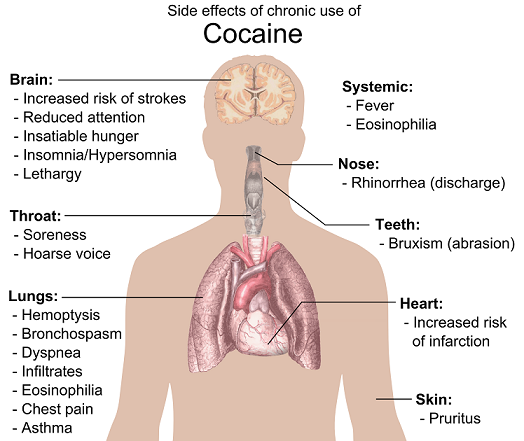
By Mikael Häggström.When using this image in external works, it may be cited as:Häggström, Mikael (2014). "Medical gallery of Mikael Häggström 2014". WikiJournal of Medicine 1 (2). DOI:10.15347/wjm/2014.008. ISSN 2002-4436. Public Domain.orBy Mikael Häggström, used with permission. (All used images are in public domain.) [Public domain], via Wikimedia Commons
Amphetamines
At first they were created by chemical laboratories as slimming products, since they stimulate the satiety center of the brain causing loss of appetite. At higher doses, they stimulate the CNS and produce euphoria, especially if they are mixed with alcohol. At higher doses they can cause visual hallucinations and psychosis. Overdose can lead to death.