The sense of touch and pain
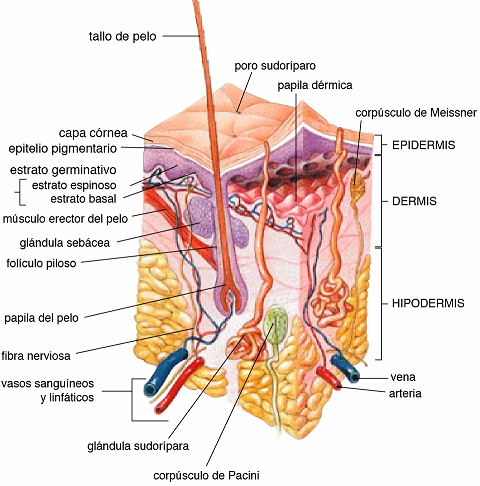
The skin, in addition to having other important functions, is the one that contains the receptors for touch and pain, both on the outside and in the orifices (mouth, nose, ear, genitals, etc.) and inside the body (digestive tract, organs, etc.). Pain receptors are the most abundant. In the skin, in addition to touch and pain receptors, there are other sensory receptors, such as those that capture pressure, cold or heat.
The skin is an organ with a protective function. It has three layers: epidermis, dermis, and hypodermis. The receivers are in the first two.
- Epidermis.
 It is the outermost layer, made up of epithelial cells, which continually divide, replacing those that are lost. In it are the pain receptors, in addition to melanocytes (cells that produce melanin that darken the skin to protect us from ultraviolet radiation), and keratin, a substance with a protective function that waterproofs the skin and hair.
 - Derma. The inner layer is formed by connective tissue, muscle tissue, hair, glands, etc. Here the receptors for temperature, pressure and touch are located. In the dermis also grow hair in the hair follicle, sebaceous gland associated with arrector pili muscle and hair raising.
- Hypodermis. It is made up of a layer of adipose tissue that acts as an insulator and a layer of connective tissue that joins the skin with adjacent organs and tissues.